

Off the Record Unpacked: The Role of the Police and the Press
Written by Thomas Kinsella
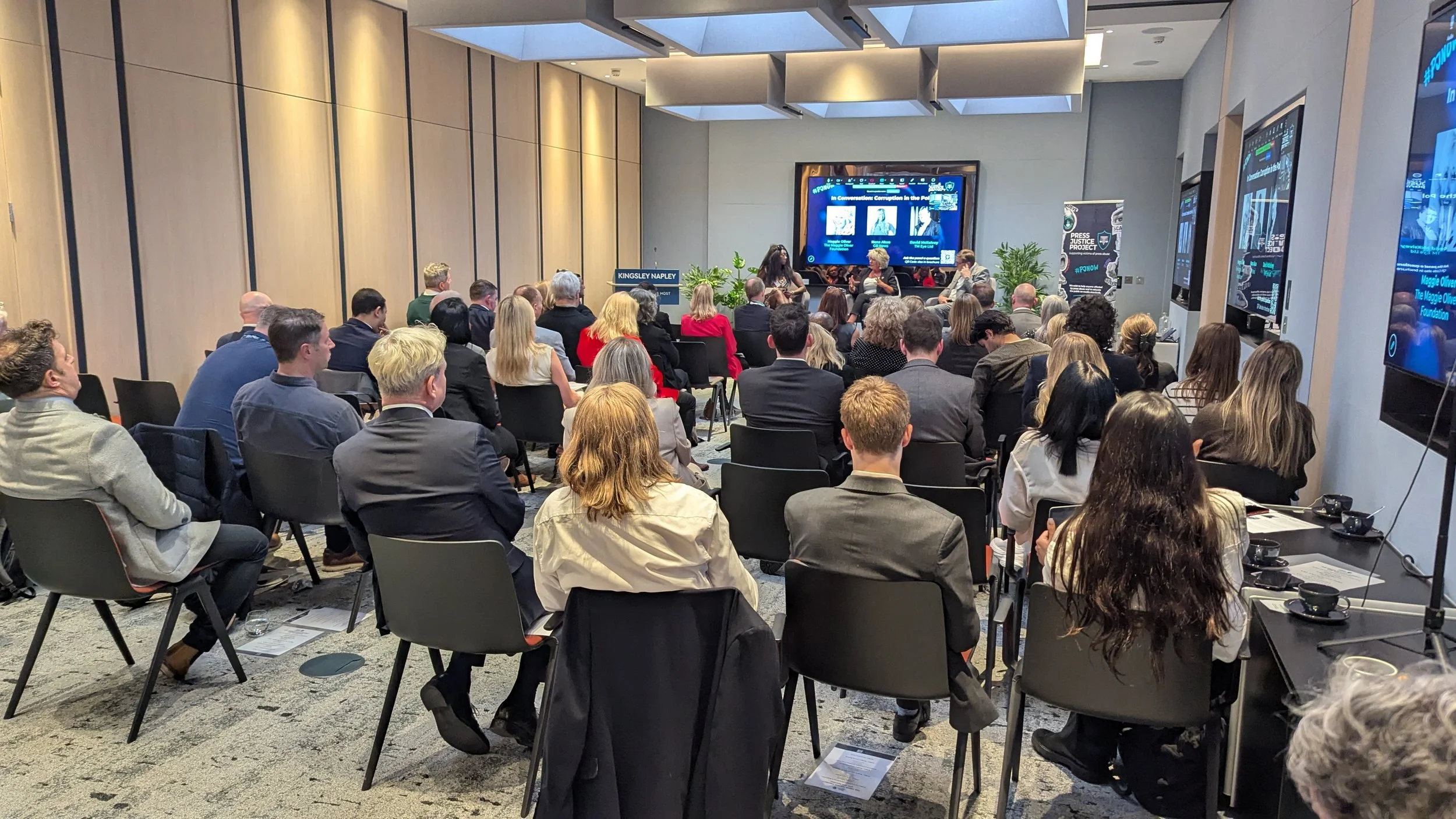
On March 18th, the Press Justice Project brought together leading voices from policing, law and accountability for its fifth conference, Off the Record an event that tackled one of the most complex and significant relationships in public life: that between the police and the press. From their years of experience, our speakers provided thought-provoking insights, sparking three compelling panel discussions that challenged assumptions and encouraged debate. With a sold-out audience and conversations continuing well into the networking reception, the event underscored the growing appetite for transparency, accountability, and meaningful dialogue in this space.
To see more photos from Off the Record click here
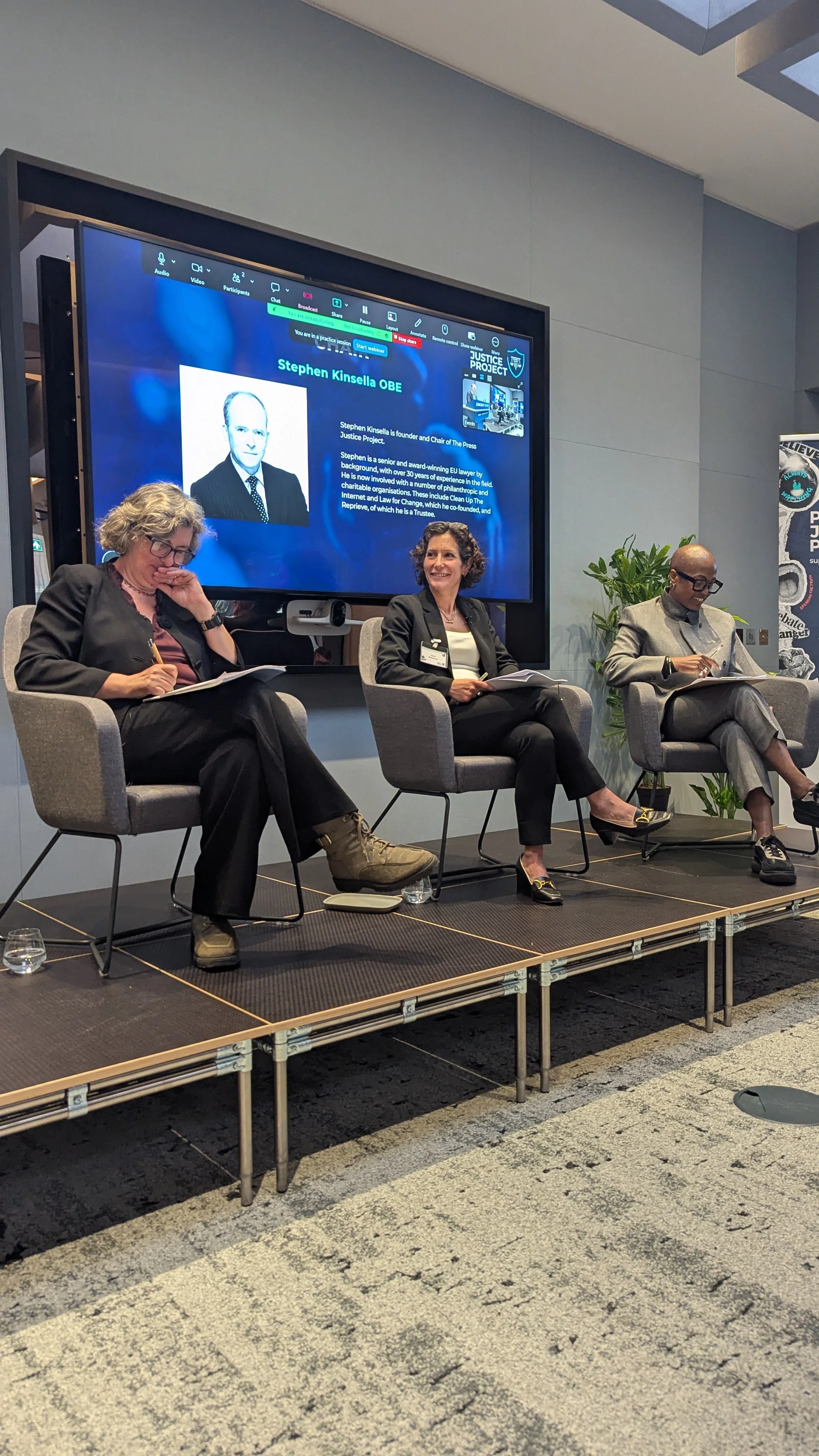
Stephen Kinsella, chair of the PJP, opened the event by discussing some of the disappointing coverage of the recent meningitis outbreak in Kent and the recent publication of new guidance on the relationship between police and the media.
The first panel was the regular “legal update” panel. The discussion focused on recent updates in media law as well as practical guidance for legal professionals dealing with potentially media-sensitive clients. The panel was chaired by Tamsin Allen, who was joined by Sara Mansoori KC and Sandra Paul.
Tamsin spoke about the now common practice of newspapers naming suspects pre- charge when the Police have been understandably hesitant to release a name at such an early stage of the investigation. Sara linked this discussion to the case of Alaedeen Sicri v Associated Newspapers Limited, who was named as a suspect in the Manchester Arena bombing, but was eventually released with no charge. Parallels were drawn to the recent coverage of Peter Mandelson’s arrest and how there continues to be a disconnect between the information the Police decide to release publicly, and what then proceeds to appear on the front page. The panellist agreed that they would like to see greater sensitivity from the media in handling personal details in the early stages of investigation, and that it would be valuable if the police and the press could coordinate better on a communication strategy.
Following this, Sandra gave insight from her work as a criminal defence lawyer, often representing clients who are more fearful of the press than the process of speaking to the police. She spoke about how her clients can be identifiable from press coverage and the terrible impact this can have on ordinary people when their private life is suddenly exposed to the world, even when they themselves are not facing charges. She focused on the Police’s unwillingness to accommodate interviews away from the station and their failure to recognise the impact press coverage can have on an investigation, despite cases where there is obvious press interest.
Finally, more recent updates regarding the interpretation of a “legitimate expectation of privacy” were discussed, following on from the ruling in ZXC v Bloomberg LP. The panel concluded with a range of questions from the audience.
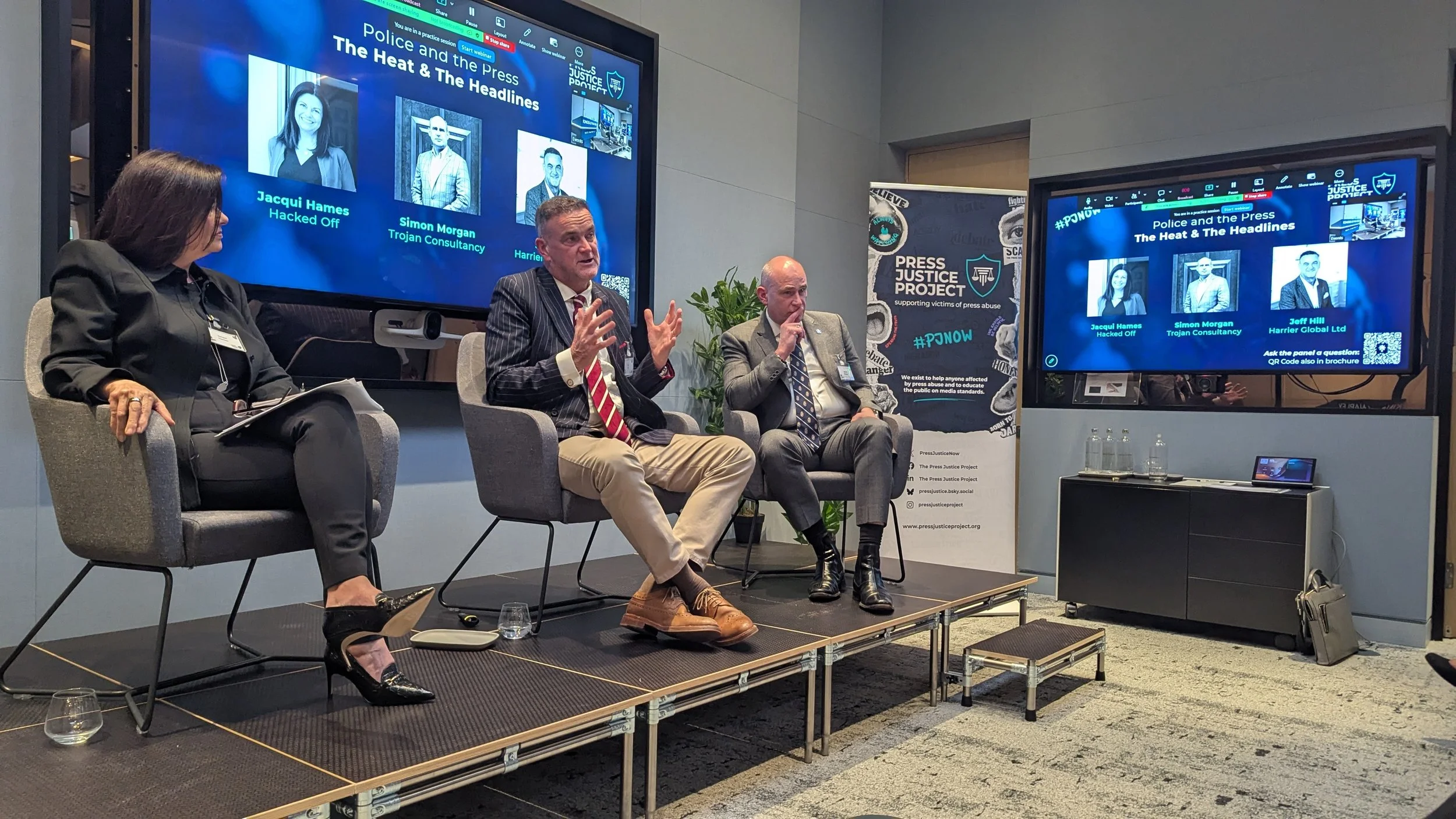
The second panel was chaired by Jacqui Hames and featured Jeff Hill and Simon Morgan. Each of them has years of experience working in different areas of the Police, at senior levels, and each was able to give an important insight into how the relationship between the Police and Press actually operates.
Jeff spoke about his experience of rising through the Police force in the 80s when the press was viewed primarily as an “irritant”, and there was little relationship between the two. He spoke about his experience working on the Soham Murders and the way the press was used by the Police to aid their investigation, shining a light on how the relationship can be a positive one. However, he went on to discuss how the relationship can be unhealthy, especially more recently. He referred to the press as “a beast you struggle to control” and how it was common understanding that if you “don’t feed them, you’ll get bitten”.
Simon discussed his experience managing a complex relationship with the press during his time as a royal protection officer. He particularly focused on the role of the paparazzi and how they made his role as a protection officer significantly harder. Even in the wake of the death of Princess Diana, he spoke of the scrum of paparazzi that would greet them at public engagements and their desire to capture all parts of the Royals’ lives. He highlighted the difference between official and unofficial engagements, and the difference between what the press felt the public needed to know and what they genuinely had a right to know.
Another common theme mentioned by all three panellists was the lack of training that the Police receive in dealing with the press. Jacqui has previously delivered the training and spoke of how the hours and funding have decreased as the power of the press has grown, with a 1-day media training course still being the common standard, and only available to senior officers. Jeff detailed the devastating pressure that officers can endure when thrust into the limelight on high-profile cases, and the important role that further training could play in helping officers manage this stress.
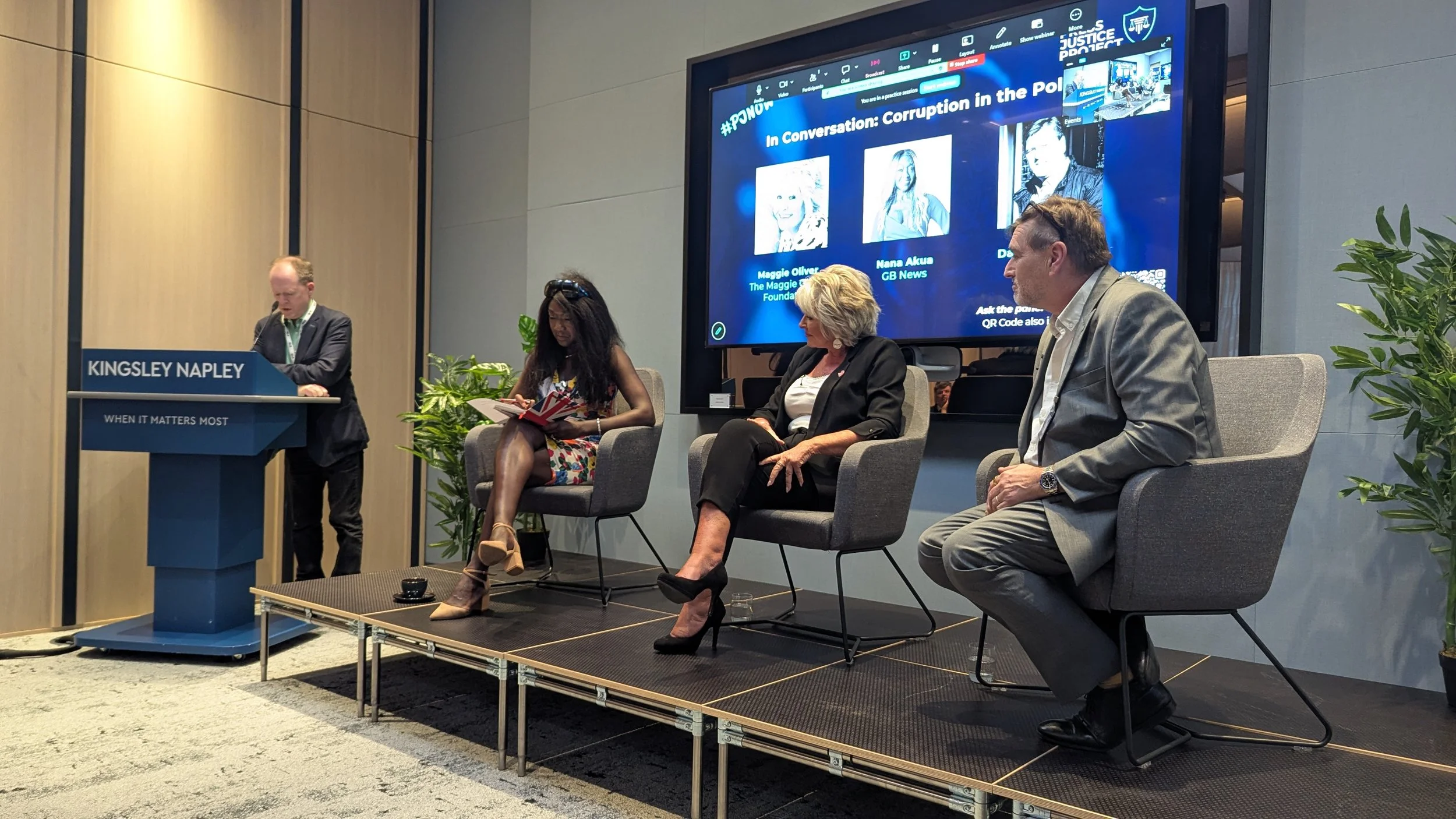
The final panel was chaired by Nana Akua and featured Maggie Oliver and David McKelvey. Both Maggie and David spoke about their experience of exposing police corruption.
Maggie highlighted the positive and incredibly important role that the press plays in exposing institutionalised corruption. Maggie is an ex-police officer who left the force after they refused to investigate systemic abuse of child sexual exploitation. She spoke about how, when she had exhausted all official avenues to try and force an investigation, she finally turned to the press to shine a light on the police failings.
This was an important reminder of the key role that the press can play in society and the importance of having a free and accountable press. David explained the process of launching a complaint against the police, and how these are handled internally and often by the same force against whom the complaint is being made. He made sensible suggestions about how the system could be reformed and how taking away the complaints handling from the Police, and handing it over to an independent body, is a necessary step to restore faith in the system. Many in the crowd felt that parallels could be drawn between this and the need for reform to how the press is regulated.
The Press Justice Project would like to thank Kingsley Napley for hosting us and all of the speakers for their invaluable contributions to an important debate.
Use this link to stay up to date on future events: Events — The Press Justice Project or sign up to the newsletter below.