

Launching 23 April 2026: Ethical Reporting Guidelines
As the media continues to influence public understanding of urgent issues, the Press Justice Project is preparing to launch new resources to improve reporting standards in key areas of public interest.
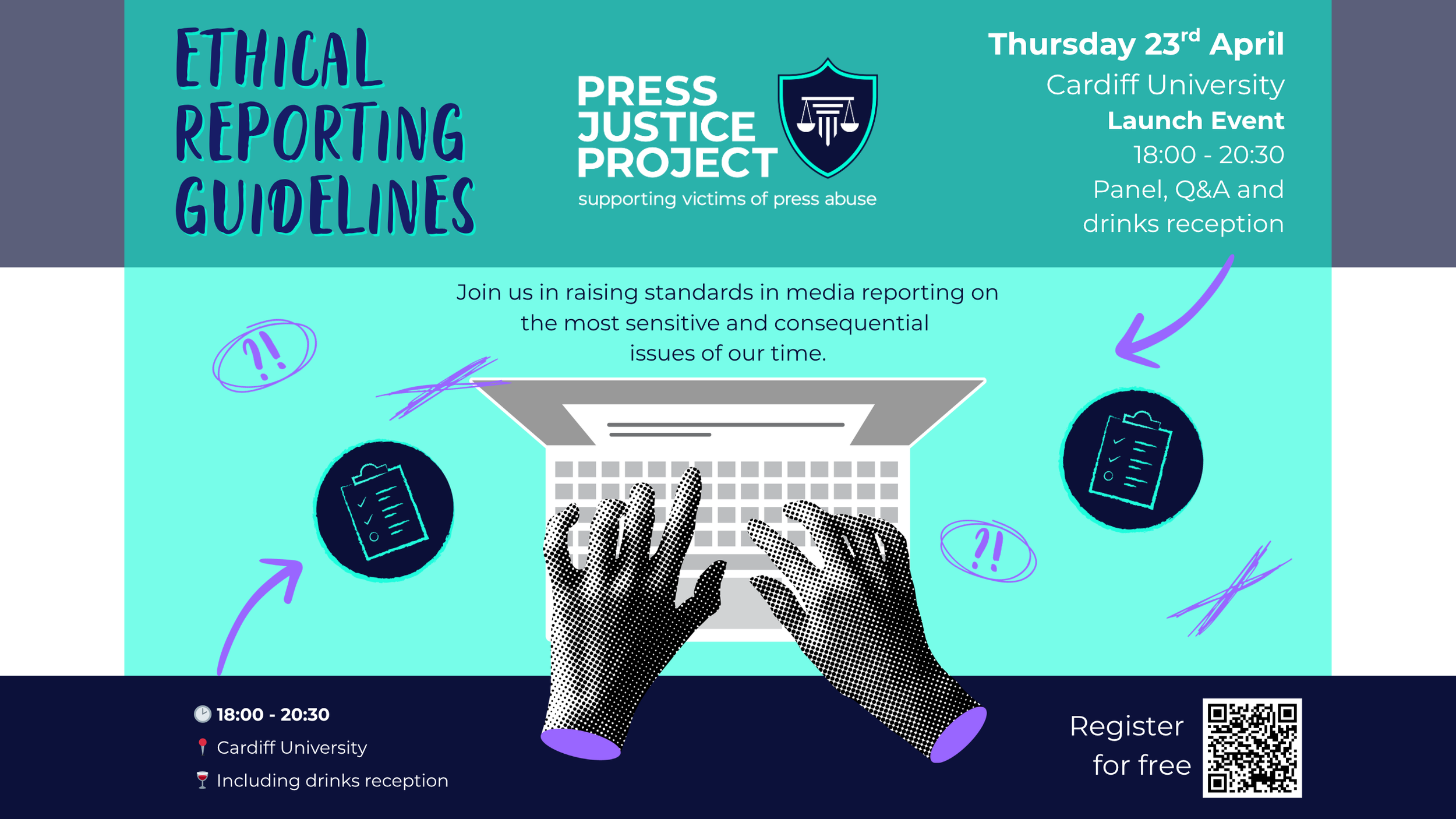
On 23 April, the Press Justice Project will officially launch its Ethical Reporting Guidelines. The event will introduce a comprehensive framework to strengthen media coverage of complex and sensitive topics.
The launch will bring together journalists, civil society organisations, and subject-matter experts to discuss the role of ethical journalism in shaping public understanding and policy.
The vast majority of journalists are committed to exposing wrongdoing, informing the public, and holding the powerful to account.
However, journalists often face unsustainable pressure to produce content quickly, sometimes at the expense of high standards and public protection.
Meanwhile, many expert organisations in civil society offer valuable insights on the impact of low press standards and ways to improve them for the benefit of both the press and the public.
These guidelines bridge that gap by combining civil society expertise into clear, accessible recommendations. They have been developed in collaboration with working journalists to reflect real-world reporting practices.
Full event details and registration information are available here.
What Are the Ethical Reporting Guidelines?
The guidelines provide practical, accessible standards for reporting on three critical areas:
● The Climate & Nature Crisis
● Mental Health & Suicide
● Domestic Abuse & Gender-Based Violence
Each set of guidelines is rooted in a shared mission: to ensure reporting is accurate, contextual, and responsible, while minimising harm and amplifying informed public debate.
A Brief Overview
At their core, the guidelines emphasise several key principles:
Accuracy and Evidence: Journalists are encouraged to reflect established scientific and expert consensus, avoiding misinformation or false balance, particularly in climate reporting.
Context and Systems Thinking: The guidance encourages connecting stories to broader social, economic, and political systems, rather than presenting issues as isolated incidents.
Accountability: Reporting should examine responsibility, whether from governments, corporations, or institutions, rather than treating events as inevitable or purely individual.
Sensitivity and Harm Reduction: For topics like mental health and domestic abuse, the guidelines stress careful language, framing, and safeguarding to prevent stigma, victim-blaming, or unintended harm.
Justice and Representation: The guidelines emphasize including diverse voices, especially those most affected, and recognising inequalities in both impact and responsibility.
Across all topics, the guidance provides clear do’s and don’ts, detailed language recommendations, and practical advice on sourcing, framing, and visuals, making it a valuable tool for newsrooms and individual journalists.
Why This Matters Now
The guidelines offer practical, accessible standards for reporting on the climate and nature crisis, mental health and suicide, and domestic abuse and gender-based violence. Each set is grounded in a shared mission to ensure reporting is accurate, contextual, and responsible, while minimising harm and supporting informed public debate.
Join the Conversation
The Ethical Reporting Guidelines Launch provides an opportunity to engage with the framework, hear from contributors, and explore practical applications of these principles. Whether you are a student, journalist, researcher, or interested in the press’s role in public life, this event will deepen your understanding of media ethics, accountability, and the real-world impact of reporting.
The launch will feature a panel discussion, audience Q&A, and a drinks reception.
23 April | 18:00–20:30 | Cardiff University
This event is free and open to all. Please register to attend.