Ethical Reporting Guidelines
A Brief Overview
At their core, the guidelines emphasise several key principles:
Accuracy and Evidence: Journalists are encouraged to reflect established scientific and expert consensus, avoiding misinformation or false balance, particularly in climate reporting.
Context and Systems Thinking: The guidance encourages connecting stories to broader social, economic, and political systems, rather than presenting issues as isolated incidents.
Accountability: Reporting should examine responsibility, whether from governments, corporations, or institutions, rather than treating events as inevitable or purely individual.
Sensitivity and Harm Reduction: For topics like mental health and domestic abuse, the guidelines stress careful language, framing, and safeguarding to prevent stigma, victim-blaming, or unintended harm.
Justice and Representation: The guidelines emphasize including diverse voices, especially those most affected, and recognising inequalities in both impact and responsibility.
Across all topics, the guidance provides clear do’s and don’ts, detailed language recommendations, and practical advice on sourcing, framing, and visuals, making it a valuable tool for newsrooms and individual journalists.
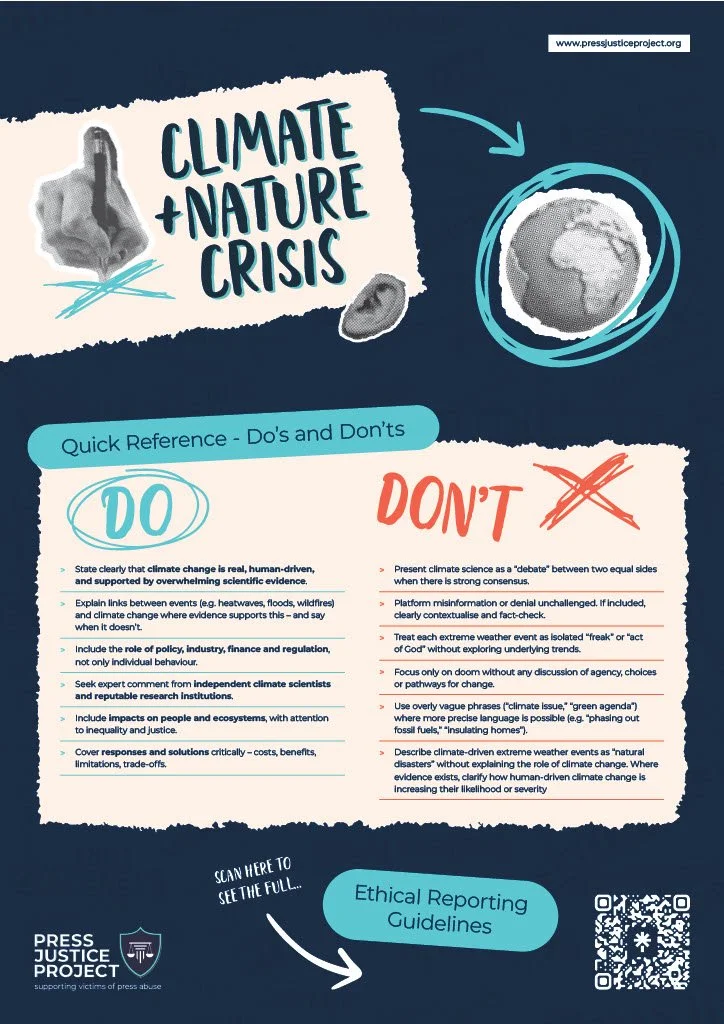
Climate and Nature Crisis
The climate and nature crisis (sometimes referred to as the ecological crisis) is a defining story of this century, shaping health, security, livelihoods, migration, and justice worldwide.
How it is reported has profound implications for public understanding, democratic decision-making and accountability.
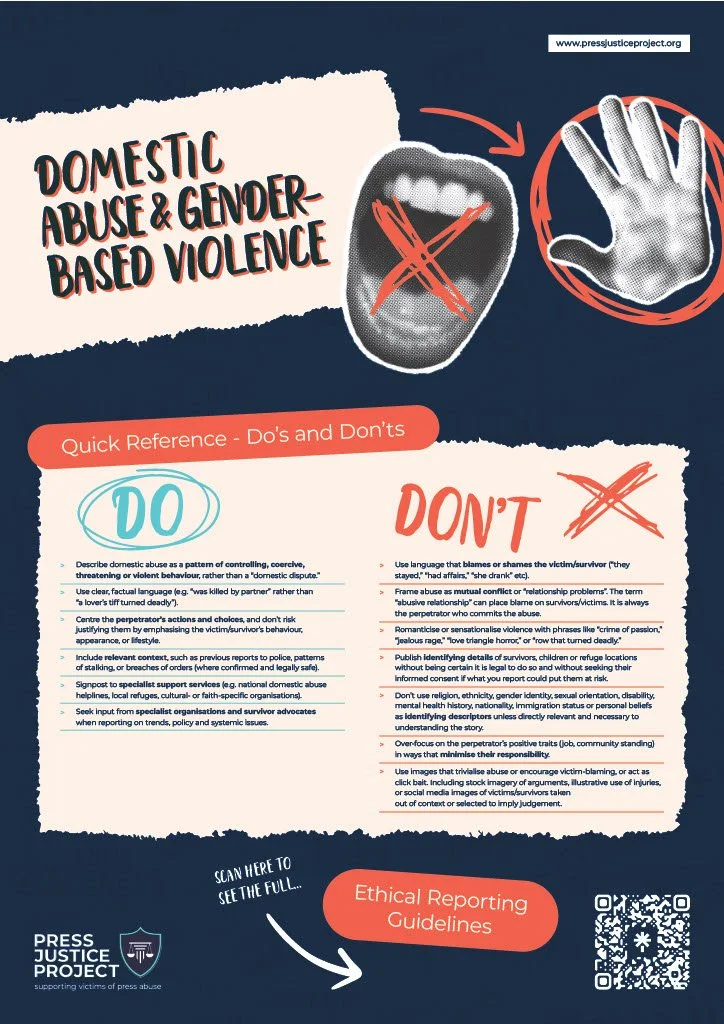
Domestic Abuse and Gender Based Violence
Domestic abuse (DA) and gender-based violence (GBV) are widespread human rights violations, not “private” issues or relationship disputes.
1 in 5 adults aged 16+ (20%) experienced domestic abuse in the last year. [1] It is also a major driver of homicide of women: in the UK; around half of female homicide victims are killed by a partner or ex-partner[2]
Media reporting can either challenge harmful myths, support survivors and promote accountability – or it can reinforce stigma, victim-blaming and dangerous stereotypes.
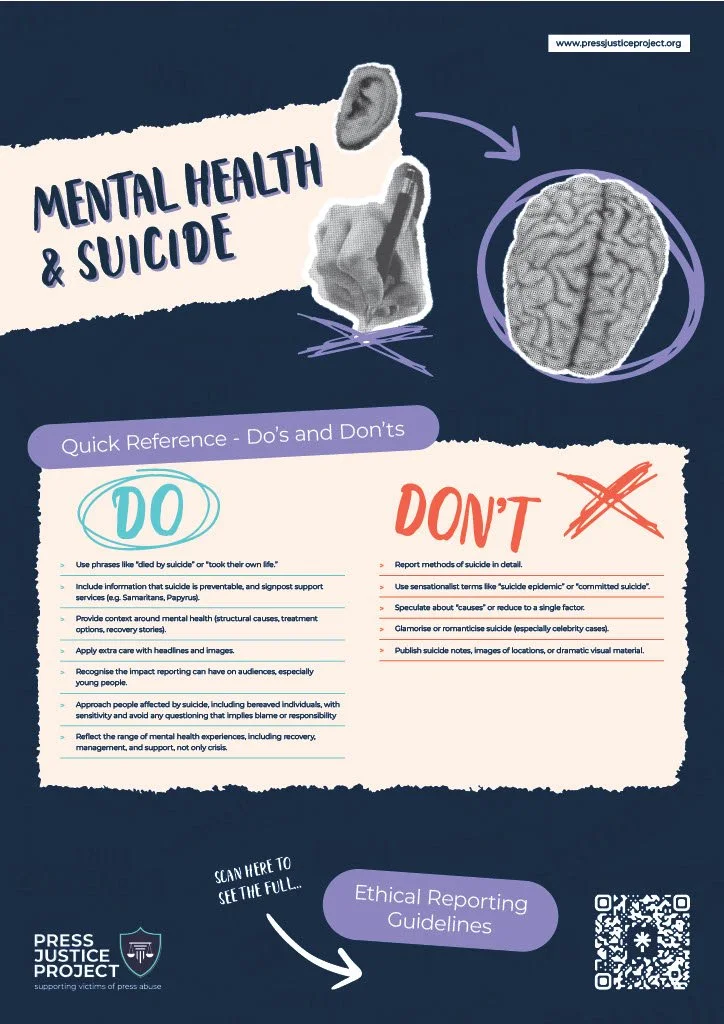
Mental Health and Suicide
Suicide is one of the most sensitive and widely covered mental health issues in the media. Reporting has a powerful influence on public attitudes, stigma, and individual safety.
While these guidelines also refer to mental health reporting broadly, additional care is required when reporting on suicide due to the risk of harm and potential for harm reduction, so these guidelines focus here.
NEWSROOM POSTER GUIDES
Quick reference guides suitable for printing and putting up as posters in your newsroom. Download and print from here (we recommend A3), or contact info@pressjusticeproject.org and we will mail you a copy.
With Thanks To…
The Ethical Guidelines were written in consultation with the following organisations.
With huge thanks to them for their expertise and input.