

Women, Media and Justice: Challenging Misogyny, Changing the Narrative
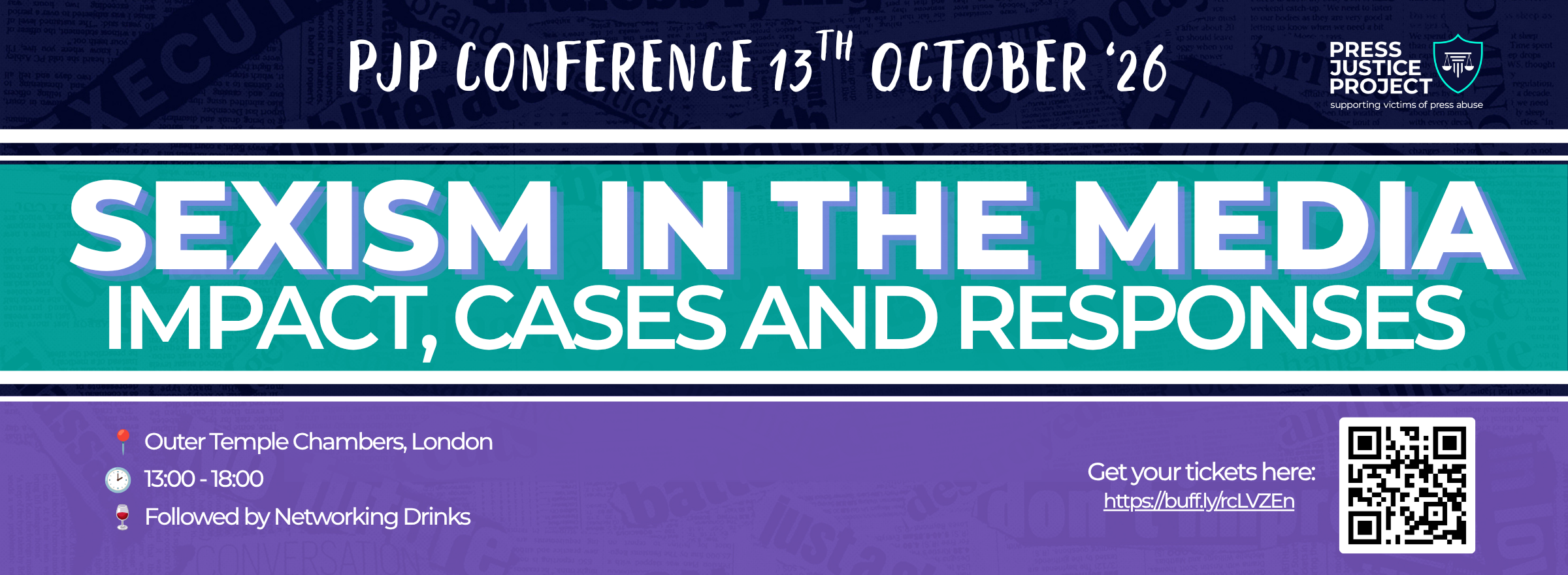
Join the Press Justice Project on 13 October as we explore the impact of misogyny in the media and what needs to change.
The Press Justice Project supports people affected by press abuse and campaigns for higher standards across journalism. On 13 October, we’re bringing that work into focus with an event looking at the ways women are treated by the media, as targets of discrimination in press coverage, and as journalists in the newsroom.
Across three panels, Sexism and Media Law, Women in Journalism, and Misogyny in the Media, we’ll hear from lawyers, journalists, campaigners and public figures who have experienced these issues first-hand and are working to change them.
This is likely to be our most popular conference event yet - be sure to buy tickets early to avoid disappointment. Tickets sell for £99 each and include a full afternoon and evening of panels and networking. All proceeds go towards supporting the PJP’s charitable work.
From NDAs to reporting from male-dominated newsrooms
Non-disclosure agreements can be used to protect legitimate business interests, such as trade secrets and commercial confidentiality. In recent years, though, they have increasingly come under scrutiny for being used in relation to complaints of harassment, discrimination or abuse.
Employers have been accused of misusing NDAs to silence women, and to enable powerful executives to evade accountability. The result is that serious misconduct is kept out of the public eye, exposing more people to harmful or abusive behaviour.
Our first panel will look at how this has played out in real cases, as well as considering relevant issues which arise in media law.
Women working in journalism, meanwhile, continue to face structural barriers, despite decades of progress. These include unequal access to senior roles and bylines, as well as the additional scrutiny and hostility women can face when covering contentious stories.
Women reporting on politics, technology and crime frequently face intense online abuse and intimidation, often in ways their male colleagues do not. That can affect individual careers, but it can also influence which stories get told and whose voices are heard.
Similar problems can be seen in the way women are portrayed by the media.
Misogynistic narratives are so familiar that they can sometimes go unnoticed. Women in public life are routinely judged on their appearance, tone and personal lives in ways their male counterparts are not. Even seemingly small choices of language can reinforce these double standards.
Survivors of harassment and abuse can face another kind of scrutiny, with intrusive coverage that repeatedly revisits their experiences rather than focusing on those responsible.
Our final panel will look directly at these patterns, drawing on the lived experiences of our speakers and asking what accountability and lasting change would actually look like.
Meet some of the speakers
Carole Cadwalladr is the investigative journalist who broke the Facebook-Cambridge Analytica story. She is a Pulitzer finalist and winner of the Orwell Prize. She is now a co-founder of The Nerve and writes the newsletter How to Survive the Broligarchy.
Gina Miller took the UK government to the Supreme Court twice over its handling of Brexit, winning both cases. She became one of the most prominent women in British public life and faced sustained racist and sexist abuse, including threats serious enough to warrant police protection. She now writes and campaigns on transparency and equality.
Anna Melton is a former journalist whose successful libel claim against the publisher of the Daily Mail resulted in a public apology and substantial damages.
Rachael Somerset is a distinguished media law solicitor specialising in defamation, privacy and reputation management at Level. She began her career working on the first phone-hacking cases and is an Ambassador for the Press Justice Project.
Mandy Garner is based at the University of Cambridge, having had a career working as a journalist at several titles and for press freedom organisations. She has spent more than a decade reporting on flexible working and workplace equality, with a particular focus on the pressures facing women balancing careers with caring responsibilities.
Lisa Moorish is a singer and songwriter who experienced phone hacking and press intrusion, with her private life targeted in the tabloids for years. She has since become a vocal advocate for press accountability and is a trustee of the Press Justice Project.
Further speakers will be announced soon.
Secure your place and join the conversation.
Tickets available for £99 here.